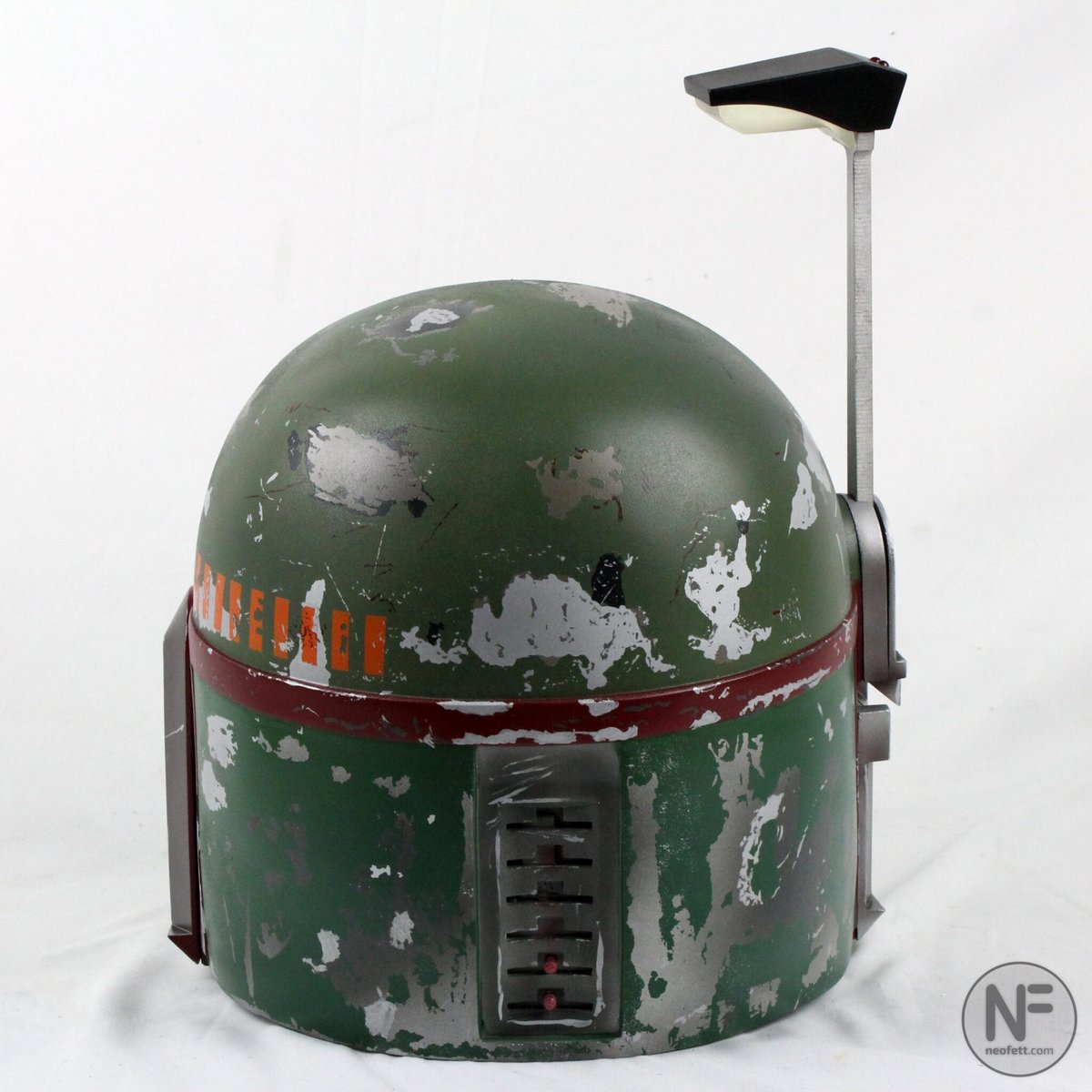
The moment Boba Fett stepped onto the screen, a silent, formidable presence in a galaxy of heroes and villains, his armor – and especially his helmet – cemented his place in pop culture. More than just a piece of costume, the Boba Fett helmet tells a story of heritage, survival, and a hunter's relentless pursuit. This isn't just about plastic and paint; it’s about the Boba Fett Helmet History & Lore that transformed a secondary character into an enduring legend.
You’re about to dive deep into the origins, design, and cultural impact of perhaps the most iconic headwear in the Star Wars universe. From its earliest conceptual sketches to its modern-day restoration, we'll unpack what makes this dented, battle-scarred bucket so endlessly fascinating.
At a Glance: What Makes the Boba Fett Helmet So Iconic
- Accidental Origins: Began as an all-white "Super Trooper" concept before evolving into the familiar military-green aesthetic.
- Fiberglass Legacy: Original helmets were crafted from fiberglass, many of which still exist in Lucasfilm archives.
- Subtle Storytelling: Every dent, scratch, and color variation on the helmet speaks to Boba Fett's harsh life and history.
- Cultural Icon: Instantly recognizable, transcending Star Wars fandom to become a symbol of cool, mystery, and resilience.
- Cosplay Challenge: Widely considered one of the most difficult Star Wars costumes to accurately replicate due to intricate detailing.
- Evolving Lore: Its appearance and perceived history have shifted and expanded with new Star Wars media, from the Original Trilogy to The Mandalorian and The Book of Boba Fett.
The Genesis of a Galactic Icon: From "Super Trooper" to Scourge
The legend of Boba Fett's helmet didn't spring forth fully formed. Like many groundbreaking designs, it was the product of creative evolution, trial, and error. Initially, the character that would become Boba Fett was conceived as an elite Imperial "Super Trooper," envisioned in pristine, all-white armor. Imagine Darth Vader, but a bit more agile, in stark white. The helmet from this early concept art hinted at the distinctive T-visor and overall shape, but without the grime and character we've come to associate with it.
It was a pivotal decision by George Lucas and his art team to pivot from this immaculate aesthetic. They opted for a more rugged, military-style color scheme that suggested a hard-worn warrior rather than a pristine Imperial enforcer. This change fundamentally transformed the character's identity, leaning into a mercenary vibe that immediately captivated audiences. The helmet, crafted from fiberglass for its original movie appearances, became the centerpiece of this new, intimidating persona. As chronicled by starwarshelmets.com, the character first appeared in the infamous 1978 Star Wars Holiday Special, an often-overlooked debut that nonetheless introduced the silhouette to the world. It was his roles in The Empire Strikes Back and Return of the Jedi that truly cemented his position as one of science fiction’s most beloved "bad guys." Many of these original helmets and costumes are still carefully preserved today in the Lucasfilm archives in California, tangible links to a pivotal moment in cinematic design.
Decoding the Helmet's Design: A Masterclass in Visual Storytelling
The Boba Fett helmet is a masterclass in non-verbal communication. It’s not just a cap for his head; it’s a canvas displaying his life, his battles, and his unwavering purpose. Every element serves a narrative function:
- The T-Visor: Immediately recognizable, this iconic black T-shape isn't just cool; it evokes a sense of alien, predatory vision, obscuring the wearer's eyes and adding to the mystique. It’s a design shared across Mandalorian armor, subtly hinting at a larger cultural connection even before the lore fully fleshed out.
- The Rangefinder: Perched on the right side of the helmet, this articulated piece of tech is far more than an ornament. In the lore, it’s a multi-function targeting macrobinocular, providing advanced HUD data, tracking, and zoom capabilities – essential tools for a bounty hunter. Its dropped position often signals a heightened state of readiness or target acquisition.
- Dents, Scratches, and Carbon Scoring: Perhaps the most critical design elements are the signs of wear and tear. Unlike the sleek, unblemished armor of Stormtroopers, Boba Fett's helmet is a testament to countless skirmishes. These imperfections aren't random; they tell a story of blaster fire deflected, close calls, and enduring a life on the fringes. They represent experience, resilience, and a lack of concern for superficial appearances.
- The Paint Scheme: A complex patchwork of faded greens, reds, yellows, and grays, the helmet's palette is anything but uniform. The specific shade of green is often referred to as "olive drab" or "military green," reinforcing the character's functional, no-nonsense approach. The red streaks and yellow accents are often interpreted as personal or clan markings, adding layers to his backstory that fans eagerly pieced together long before official explanations.
This meticulous detailing ensures that even without seeing Boba Fett’s face or hearing his voice, you understand he is a formidable, experienced, and dangerous individual. The helmet is his silent biography.
The Man Behind the Mask: Exploring Boba Fett's Identity Through His Gear
While the helmet is visually striking, its true power comes from its connection to the man (and clone) beneath it. The lore surrounding Boba Fett's identity, particularly his origins as a clone of the legendary Mandalorian bounty hunter Jango Fett, imbues his helmet with profound significance.
Boba didn't just pick up a random helmet; he inherited his father's armor, modifying and wearing it as a tribute and a statement of his own identity. This is why you'll find subtle yet distinct differences between Jango Fett's pristine, blue-and-silver helmet from the Prequel Trilogy and Boba's battle-worn, green-and-red version. Jango's helmet represents a career in its prime, sharp and functional, while Boba's tells a story of enduring hardship and carrying on a legacy.
Post-Sarlacc, in The Mandalorian and The Book of Boba Fett, the helmet undergoes a significant arc. Initially recovered in a battered, almost discarded state, its restoration by Boba Fett himself signifies his reclaiming of his identity and heritage. He cleans it, repairs it, but crucially, he keeps the dents and scars. These aren’t flaws to be erased; they are badges of honor, testament to his survival and transformation from a mercenary into a crime lord with a code. The act of wearing his father's armor, now refined and revitalized, underscores his deep connection to his past while forging his own future. To truly appreciate the journey of this iconic headgear, you might want to Explore the Boba Fett helmet in more detail through its various appearances.
Evolution on Screen: Tracking the Helmet's Changes Across Star Wars Media
The Boba Fett helmet, while consistently iconic, has seen subtle but significant evolutions across its various cinematic and television appearances, reflecting both production realities and expanding lore.
The Original Trilogy (ESB & RotJ)
In The Empire Strikes Back and Return of the Jedi, the helmet established its legendary status. Here, it’s portrayed as a static, battle-damaged piece. The details were meticulously hand-painted, resulting in slight variations between prop versions used in different scenes or for different publicity shots. This era defined the classic "olive green" and red markings, the distinct T-visor, and the functionality of the rangefinder. This is the Boba Fett most fans grew up with – a mysterious figure whose past was only hinted at by his weathered gear.
The Prequel Trilogy (Attack of the Clones)
While Boba Fett himself is a child in Attack of the Clones, we see his father, Jango Fett, wearing a strikingly similar but distinct helmet. Jango's armor is primarily blue and silver, and his helmet is notably cleaner, with fewer visible dents and scratches. This visual contrast powerfully illustrates the passage of time and the harsh life Boba would later endure. It establishes the "Mandalorian" aesthetic for the helmet, hinting at the warrior culture long before it was explored in depth. It's a foundational piece for understanding the generational aspect of the armor.
The Mandalorian & The Book of Boba Fett
The recent live-action series brought the helmet back to prominence with a new narrative. When Din Djarin, the titular Mandalorian, finds Boba Fett's armor, including his helmet, it's significantly more deteriorated and sand-blasted from years in the Sarlacc pit. This provides a dramatic visual starting point. Once reclaimed, Boba Fett undertakes a full restoration. The helmet is cleaned, repaired, and repainted, but crucially, the iconic dents and battle damage are preserved. This modern interpretation gives the helmet a new lease on life, showcasing its resilience and serving as a visual metaphor for Boba Fett's own resurgence. The meticulous care given to its onscreen appearance in these series further deepened the lore surrounding the helmet's endurance and significance.
Beyond the Screen: The Helmet's Cultural Impact and Collectibility
The Boba Fett helmet isn't just a prop; it's a cultural touchstone. Its unique blend of mystery, functionality, and cool factor has resonated with generations of fans, elevating it beyond Star Wars into a broader icon of anti-hero chic and enigmatic power.
Why It Resonates
Part of the helmet's enduring appeal lies in its ability to evoke so much with so little. We rarely see Boba Fett's face, making the helmet his primary identifier. It allows fans to project their own interpretations onto the character, filling in the blanks of his stoic demeanor. It represents the lone wolf, the ultimate survivor, and the professional who gets the job done – qualities that appeal universally.
The Thrill of the Replica
For fans, owning a piece of this iconography is a dream. The market for Boba Fett helmet replicas is vast, ranging from mass-produced toys to high-end, screen-accurate collector's items. According to starwarshelmets.com, while several licensed companies attempted to produce accurate replicas over the years, it wasn't until Master Replicas released their Limited and Signature Edition collectibles that fans felt truly rewarded with a genuinely accurate rendition. These replicas are often sought after for their fidelity to the original prop's intricate details, paint application, and weathering.
The Toughest Costume to Nail
Beyond official merchandise, the Boba Fett helmet holds a special place in the cosplay community. It’s widely regarded as one of the toughest costumes to accurately recreate. The reason? The massive amount of hand-detailing and intricate painting required. Every scratch, every scorch mark, every subtle color fade needs to be painstakingly replicated to achieve authenticity. This challenge is part of its allure; successfully crafting a screen-accurate Boba Fett helmet is a badge of honor among cosplayers, a testament to skill and dedication. The commitment to perfecting such a detailed piece of armor reflects the deep connection fans feel to its history and the character it represents.
Common Questions About Boba Fett's Helmet
Given its mystique and evolving lore, the Boba Fett helmet often sparks a flurry of questions. Let's clear up some of the most common ones.
Is Boba Fett's Helmet Mandalorian Armor?
Yes, within the established lore, Boba Fett's helmet (and his entire suit of armor) is indeed Mandalorian. His father, Jango Fett, was a Mandalorian foundling and wore similar armor. Boba inherited and adapted this armor. While Boba himself wasn't strictly a "true" Mandalorian in the traditional sense of following their creed (especially after Mandalore was purged), the armor itself is unequivocally of Mandalorian design and heritage, a symbol of their warrior culture.
What is the Rangefinder For?
The rangefinder, the articulated stalk on the right side of the helmet, is a crucial piece of technology for a bounty hunter. In the lore, it functions as a multi-purpose sensor and targeting array. It contains a macrobinocular scope for long-range viewing, an environmental scanner, and can project a heads-up display (HUD) with target acquisition data, tracking information, and other vital statistics directly into the wearer's vision. When dropped down, it signals that Boba is actively scanning or targeting.
Why Is Boba Fett's Helmet So Beat Up?
The dents, scratches, and scorch marks on Boba Fett's helmet are not random. They tell a story of a long and dangerous career as a bounty hunter. Each imperfection represents a battle fought, a close call, or a near-death experience. Unlike the pristine gear of Imperial forces, Boba Fett's armor reflects a life lived on the fringes, constantly in conflict. These marks are badges of honor, proving his resilience and skill in surviving countless encounters across the galaxy. They are a deliberate design choice that speaks volumes about his character.
What's the Difference Between Jango and Boba's Helmets?
While similar in overall design due to their shared Mandalorian heritage and familial connection, there are distinct differences:
- Color Scheme: Jango's helmet is primarily silver and blue, often with a more polished finish. Boba's is green, red, and yellow, with a heavily weathered, battle-scarred appearance.
- Condition: Jango's helmet, as seen in Attack of the Clones, is relatively clean and in good condition, reflecting his peak as a bounty hunter. Boba's, particularly in the Original Trilogy, is extensively damaged and worn, showing its age and the hard life it has endured.
- Specific Markings: While sharing the core design, the specific markings and weathering patterns differ, reflecting individual wear and tear and personal modifications over time.
Crafting Your Own Legacy: A Guide to Boba Fett Helmet Replicas and Cosplay
For many fans, admiring the Boba Fett helmet isn't enough; they want to own it, or even wear it. Venturing into the world of Boba Fett helmet replicas and cosplay is a rewarding journey, but one that demands attention to detail.
Choosing a Replica: Licensed vs. Fan-Made
- Licensed Replicas: Companies like Master Replicas (historically significant, as noted by starwarshelmets.com), Hasbro, and various prop manufacturers offer officially licensed helmets. These often prioritize screen accuracy within a specific price point and are typically made from durable materials. They offer a reliable way to own a piece of the lore without the intensive labor of creation. Quality can vary, so research individual product reviews.
- Fan-Made Replicas: This is where true artistry often shines. Independent artists and dedicated fans produce incredibly accurate, handcrafted helmets, often starting from raw casts and meticulously painting and weathering them. These can be highly sought after and command premium prices due to their unparalleled fidelity to the source material. However, quality and availability can vary significantly, requiring careful vetting of the creator.
The Challenge of Accuracy
Achieving screen accuracy for a Boba Fett helmet is no small feat. It involves more than just getting the shape right. Key considerations include:
- Paint Matching: The specific shades of green, red, and yellow are notoriously difficult to match. Reference photos from original props are invaluable. Many dedicated fan communities have extensively documented the precise paint codes and layering techniques.
- Weathering and Damage: This is the make-or-break element. The dents, scratches, blaster marks, and general grime are not random. They are specific to different versions of the helmet (e.g., ESB vs. RotJ vs. The Mandalorian). Replicating these with precision requires patience, artistic skill, and often, multiple layers of paint, washes, and careful abrasion.
- Materials: While original props were fiberglass, modern replicas can use fiberglass, ABS plastic, or even 3D-printed resins. The material impacts weight, durability, and how well it takes paint and weathering.
- Internal Components: For serious cosplayers, the inside matters too. Padding, a working rangefinder mechanism, and even internal electronics for lights or sound can elevate a replica from a static prop to an immersive costume piece.
Resources for Aspiring Cosplayers
If you're considering tackling a Boba Fett helmet yourself, the good news is you're not alone. The Star Wars cosplay community is vibrant and incredibly supportive:
- Online Forums & Groups: Sites like The Dented Helmet (a highly respected community specifically for Boba Fett costuming) offer an unparalleled wealth of information, tutorials, and peer support.
- Reference Libraries: Many sites compile extensive galleries of original prop photos, side-by-side comparisons, and detailed schematics to help you achieve accuracy.
- Kit Builders: You can purchase raw helmet casts or partial kits from independent makers, allowing you to handle the challenging paint and weathering stages yourself.
Embarking on this journey is a testament to your passion for the character and his incredible legacy.
The Enduring Legacy of a Dented Icon
The Boba Fett helmet stands as a testament to intelligent design and evolving narrative. It began as a simple costume piece, born from an initial "Super Trooper" concept, and through its battle-scarred appearance and the rich lore that blossomed around its wearer, it transformed into one of the most recognizable and beloved icons in the Star Wars universe.
From its fiberglass origins to its painstaking restoration in modern series, this helmet has been more than just protection; it's been a character in its own right, silently communicating defiance, survival, and a lineage of formidable warriors. Whether you're a casual fan, a dedicated lore enthusiast, or an aspiring cosplayer aiming to master its intricate details, the Boba Fett helmet continues to inspire. It reminds us that sometimes, the most enduring heroes (or anti-heroes) are defined not by what they say, but by the silent, powerful stories etched into the very armor they wear.